Vaishno Devi Yatra for Senior Citizens: A Family Guide
By My Quick Trippers · 20 Oct 2026
7 min read · Pilgrimage
Every year, lakhs of families travel to Katra with one shared hope: that grandparents, parents and children can stand together before the holy cave of Mata Vaishno Devi. The yatra is one of India's most accessible major pilgrimages, and that is precisely why it works so well as a multi-generational trip — the shrine board has spent decades building infrastructure for pilgrims who cannot, or should not, walk 12 kilometres uphill. Yet many families still arrive under-prepared, assuming the trek is the only way up, or pushing elderly parents through a climb their knees never signed up for. This guide is the practical version: how senior citizens can actually do the Vaishno Devi yatra comfortably, which options exist at each stage, what the family should book in advance, and how to keep the journey devotional rather than exhausting. For the step-by-step trek route itself, see our Vaishno Devi trek route and Bhawan guide, and for the paperwork side, our Vaishno Devi yatra registration and ropeway guide covers the yatra slip and Bhairon Nath ropeway in detail.
Why Vaishno Devi Works for Senior Citizens
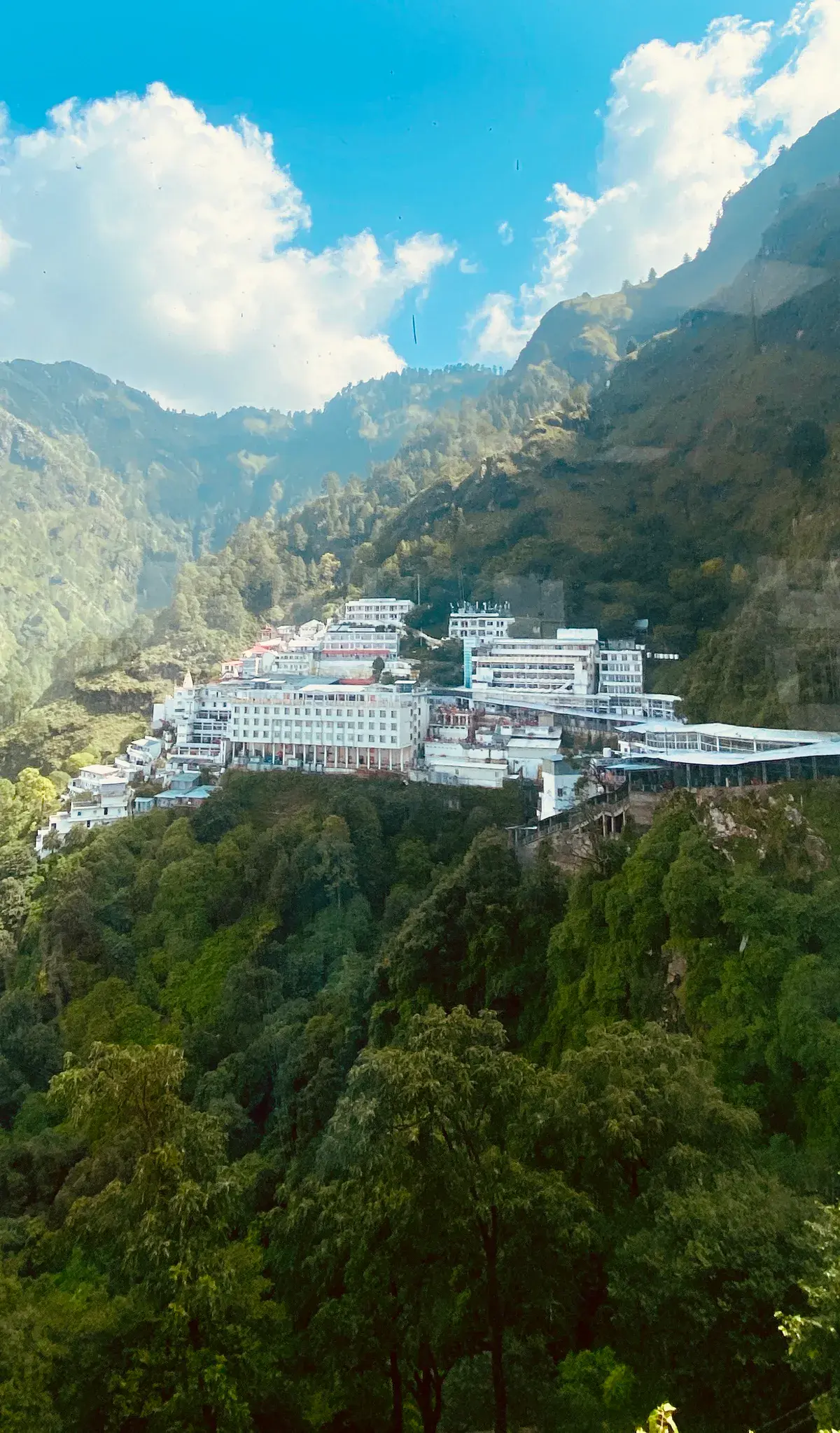
The first thing to understand is that the yatra is not a single hard trek but a layered system of options. The base town of Katra sits at the foothills of the Trikuta mountains, and from there the shrine board maintains a well-paved, lit and sheltered track to Bhawan, the main shrine, roughly 12 kilometres away. Along the way there are resting shelters, food points, medical aid posts and drinking water stations at regular intervals, which matters enormously when travelling with older pilgrims. More importantly, nobody is forced to walk: battery-operated cars run on a separate track section for senior citizens and the differently abled, ponies and palkis (palanquins) are available at fixed, board-regulated points, and helicopter services fly from Katra to Sanjichhat, leaving only a short final stretch to the Bhawan. Families can therefore mix and match — grandparents fly or ride, younger members walk, and everyone meets at Bhawan for darshan together. That flexibility is the whole secret of a successful family yatra. If helicopter travel interests you, read our Vaishno Devi helicopter booking guide before you plan dates, since seats sell out fast in peak season.
Choosing the Right Way Up: Walk, Pony, Palki, Battery Car or Helicopter
The honest answer for most senior citizens is: do not walk the full distance unless they are genuinely fit and keen. The track is well maintained but it climbs steadily, and the altitude and crowds add strain that is easy to underestimate. Battery cars are the gentlest option for those who can manage a short walk at either end: they operate between Ardhkuwari and Bhawan for registered senior citizens and differently abled pilgrims, subject to availability, so reach the booking point early in the day. Ponies are widely available from Katra and suit pilgrims who are comfortable sitting astride for a couple of hours, though the ride can be bumpy; agree the fare and the drop point before mounting, and use only the board-authorised counters.
Palkis, carried by four bearers, are the most comfortable and the most expensive option, and they can carry a pilgrim almost the entire way — ideal for elderly parents with knee or heart conditions, but book through official counters and confirm the price in advance. Helicopters remain the fastest and least strenuous option, cutting the journey to a few minutes of flying plus a roughly 2.5-kilometre walk or pony ride from Sanjichhat to Bhawan; check current schedules and fares on the official shrine board website, as both change with season and demand. Our companion piece on Char Dham senior citizen tips and helicopter options covers similar trade-offs for the Himalayan yatras, which many families plan right after Vaishno Devi.
Registration, Darshan and Timing It Right
Every pilgrim needs a yatra registration slip, which is free and can be obtained online in advance or at counters in Katra — do it online before you travel, because the counter queues in Navratri and summer holidays can eat hours. For darshan itself, the shrine operates around the clock with aarti breaks, and the least crowded windows are typically late night and early morning; with senior citizens, a late-evening darshan after a daytime rest often works better than a pre-dawn rush. Carry a valid photo ID for every member, including children, and keep medicines in hand luggage rather than checked bags, since the final approach to Bhawan involves security checks and lockers for phones, cameras and leather items. Footwear rules, dress codes and prasad arrangements are all standardised at Bhawan, so there are few surprises if you read the shrine board's current instructions before leaving home.
One more family tip: decide in advance whether you will also visit Bhairon Nath temple, which sits above Bhawan and is traditionally considered to complete the yatra — the ropeway makes it easy even for older pilgrims, but it adds time and a separate queue, so factor it into your day rather than discovering it at the top. Families combining this trip with other north Indian pilgrimages often pair it with the Kedarnath yatra complete travel guide for a longer devotional circuit.
Health, Stay and Packing Checklist for Elderly Pilgrims
Before the trip, a routine check-up is worth the effort, particularly for pilgrims with cardiac conditions, diabetes, asthma or knee problems — carry a written prescription list and twice the medicines you expect to need, split between two bags in case one goes missing. Katra has a good range of hotels, from budget lodges near the bus stand to comfortable family hotels, and the shrine board also runs accommodation at Bhawan and along the route; for senior citizens, a hotel with a lift, ground-floor rooms on request and in-house dining removes a surprising amount of daily friction. Pack light but warm: even in summer, evenings at Bhawan can be cool and breezy, and in winter a proper jacket, woollen cap and gloves are essential. Comfortable walking shoes with grip matter more than new shoes — break them in before the trip.
Keep water, dry snacks, a small torch and any daily medication in a daypack that stays with the elderly pilgrim at all times, and agree a meeting point at Bhawan in case the group splits in the darshan queue. If the family wants the logistics handled end to end, a packaged option such as the Vaishno Devi tour package from My Quick Trippers covers transport, stay and darshan assistance, which is often the simplest choice when three generations are travelling together.
A Gentle 2-Day Family Itinerary
Day one: arrive in Katra by train to Katra station or by road from Jammu, which is roughly 50 kilometres away, and check into your hotel by afternoon. Use the rest of the day to collect or verify yatra slips, visit the local market for light woollens or rain gear if needed, and rest properly — do not start the climb the same evening unless everyone is fresh. Day two: begin early with the helicopter or pony option for senior citizens, while younger members can walk if they wish, and aim to reach Bhawan by late morning or afternoon. After darshan and prasad, take the ropeway to Bhairon Nath if the group has energy, then descend the same way and return to Katra for a relaxed evening meal and an overnight stay.
This unhurried rhythm is the difference between a yatra the family remembers fondly and one remembered for sore knees and queues. If you have an extra day, the nearby Haridwar and Rishikesh 2-day itinerary makes a natural extension for families heading back towards Delhi, combining Ganga aarti with the same devotional mood. However you plan it, remember the golden rule of pilgrimage with elders: the darshan is the destination, not the difficulty of reaching it, and Vaishno Devi is one of the few great shrines in India where comfort and devotion genuinely go together.
Share this article