Valley of Flowers 2027 Season: Dates, Peak Bloom & Planning Guide
By My Quick Trippers · 20 Nov 2026
6 min read · Trekking
Valley of Flowers National Park opens for 2027 on its usual window: 1 June to 31 October 2027, with the peak bloom in mid-July to mid-August. It is the one Himalayan trek where the destination is not a summit or a temple but a valley floor covered in wildflowers — and the 2027 season is the one to plan now, because the best weeks (the bloom) are also the weeks when the Ghangaria base fills first.
One caveat on the dates: the 1 June–31 October window is the park's usual season, repeated every year, and the Uttarakhand Forest Department confirms it each May. Treat it as expected until that confirmation, and check the Forest Department's notice in May 2027. The bloom timing — mid-July to mid-August — is the stable part: it follows the monsoon, not an announcement. For the paired pilgrimage, see our Hemkund Sahib Yatra 2027 guide.
Valley of Flowers 2027: season dates and bloom calendar
- Season (usual): 1 June – 31 October 2027; Forest Department confirms in May 2027
- Peak bloom: mid-July to mid-August — the valley at its most colourful
- Early season (June): snow patches, fewer flowers, clearer trails, fewer people
- Late season (September–October): golden light, thinning flowers, the quietest weeks
- Hemkund Sahib (paired trek): season roughly late May to October; the Trust announces around March 2027
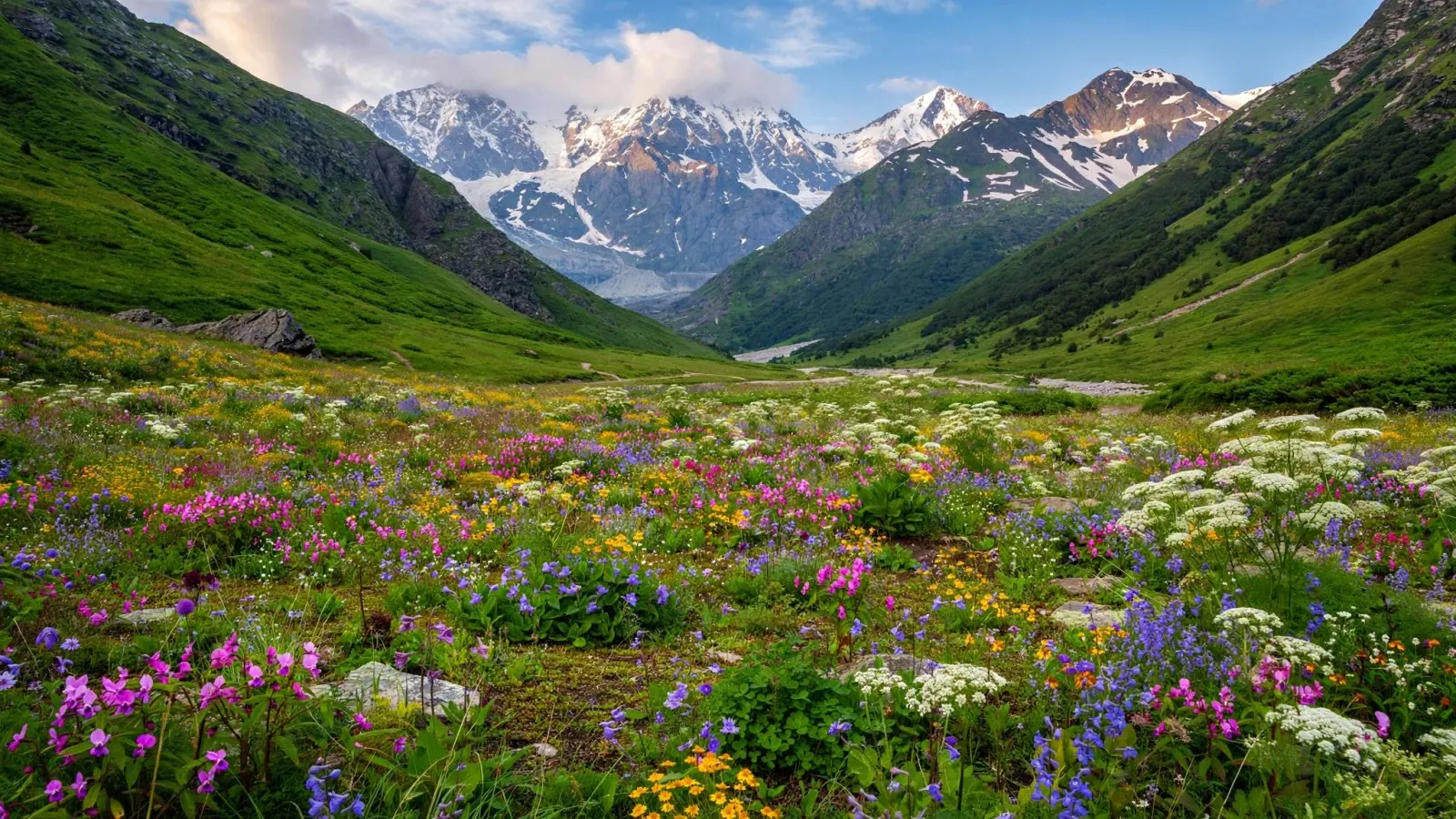
The bloom is the whole point, and it is worth timing properly. June is green and fresh but the flowers are just starting; mid-July to mid-August is the carpet — blue poppies, cobra lilies, potentillas, a different species in flower every week; September keeps the colour but thinner, with the light turning golden. If you can pick only one week, pick the last week of July.
The route: Govindghat to Ghangaria to the Valley
The trek starts at Govindghat, on the Badrinath road, and climbs about 9 km to Ghangaria — the base village where everyone stays. From Ghangaria it is about 3–4 km into the Valley itself, a gentle walk along the Pushpawati river. The Valley is a day trip from Ghangaria: walk in, spend the day among the flowers, walk back. There is no staying inside the park — it is a UNESCO World Heritage Site and a national park, and entry is day-only with a Forest Department permit.
The standard plan is three days on the ground: day one, Govindghat to Ghangaria; day two, the Valley; day three, Hemkund Sahib (the steep climb to the high lake and gurudwara) or a second Valley day; day four, descend to Govindghat. Fit walkers do it in three; most people are happier with four. For the full route and permit detail, our Valley of Flowers trek guide covers the ground this season post does not repeat.
Permits and practicalities
Entry to the Valley needs a Forest Department permit, issued at the Ghangaria checkpost (and online when the portal is open for the season). Carry ID proof, and keep the permit with you inside the park — rangers check. There is no food or stay inside the park, so carry water and food from Ghangaria, and carry everything out: the park's rules on litter are strict and enforced.
- Stay in Ghangaria: guesthouses and the gurudwara sarai fill in the bloom weeks — book ahead, or base in Govindghat and start early.
- The monsoon is the season: July–August rain is part of the trek, not an exception — carry a proper rain layer and waterproof your bag.
- Leeches on the lower trail in July are normal; salt and covered ankles deal with them.
- Altitude is moderate (Ghangaria ~3,050 m, the Valley ~3,600 m) but the climb is real — walk slowly on day one.
- The Char Dham season overlaps: the same roads carry Kedarnath and Badrinath traffic, so the Govindghat approach is busiest in May–June. Our [Kedarnath opening date 2027](/blog/kedarnath-opening-date-2027) page tracks that season's dates.
What flowers will you actually see
The Valley's name promises flowers, and the bloom delivers — but it changes week by week, which is why the date matters more here than on any other trek. June opens with the early species: potentillas and the first blue poppies (Meconopsis), scattered rather than carpeted. July is the build: cobra lilies (Arisaema), geraniums, marsh marigolds and the Himalayan balsam joining in, the valley floor turning blue and pink and yellow in patches. Late July to mid-August is the peak — the famous carpet, with the blue poppy at its best and the valley at its most photographed. September thins the flowers but sharpens the light, and the high meadows turn gold as the season closes.
Getting to Govindghat
Govindghat is on the Badrinath road, about 25 km before Badrinath itself. The usual approach is Haridwar or Rishikesh by train or flight (Dehradun's Jolly Grant airport), then a long day's drive up the Alaknanda valley to Govindghat — the road is good but slow, and the Char Dham traffic in May–June adds hours. Most trekkers break the journey at Joshimath or Pipalkoti. Buses and shared jeeps run the route in season; a private car is worth it if you are short on time. From Govindghat, the trail to Ghangaria is the only way in — no road, no vehicles, just the 9 km climb.
When to go in 2027
Last week of July if you want the bloom at its best; mid-June if you want quiet trails and do not mind fewer flowers; September if you want golden light and empty paths. Avoid the opening week unless you enjoy crowds — the first days of June bring the Char Dham overflow. And pair it: the Valley and Hemkund Sahib share the same base, the same trailhead and the same three days, so the two together are the efficient trip. The Kumbh 2027 hub covers the year's other great Uttarakhand gathering, the Haridwar Kumbh, which closes in April — before the Valley opens.
Frequently Asked Questions
When does Valley of Flowers open in 2027?
The usual season is 1 June to 31 October 2027, confirmed by the Uttarakhand Forest Department each May. Treat the dates as expected until that confirmation.
When is the best time to see the flowers?
Mid-July to mid-August is the peak bloom — the valley floor at its most colourful. The last week of July is the single best week if you can choose one.
Can I combine Valley of Flowers with Hemkund Sahib?
Yes — they share the same base (Ghangaria) and the same approach from Govindghat. The standard plan is a Valley day plus a Hemkund day, in three to four days on the ground. Hemkund's 2027 season is announced by its Trust around March 2027.
Do I need a permit for Valley of Flowers?
Yes — a Forest Department entry permit, issued at the Ghangaria checkpost (and online when the season portal is open). Carry ID proof and keep the permit with you inside the park.
How difficult is the trek?
Moderate. Govindghat to Ghangaria is about 9 km of steady climbing; the Valley itself is a gentle 3–4 km day walk. The altitude (Ghangaria ~3,050 m, Valley ~3,600 m) is manageable for anyone reasonably fit — walk slowly on day one.
Share this article