Hemkund Sahib Yatra 2027: Season, Route, Altitude Tips and Planning Guide
By My Quick Trippers · 21 Oct 2026
8 min read · Pilgrimage
Hemkund Sahib sits at around 4,600 metres in the Garhwal Himalaya, a glacial lake ringed by seven snow peaks, with a star-shaped gurdwara on its shore that draws Sikh pilgrims and trekkers in equal numbers. It is one of the highest pilgrimage destinations in India that ordinary travellers can reach on foot, and that combination — genuine altitude, a short but steep trail, and a sacred lake that feels far more remote than it is — makes it both deeply rewarding and easy to underestimate. Planning for the 2027 season starts with one discipline: treat every date, price and facility detail as provisional until the official announcements for the season are published, because the yatra window, registration rules and helicopter or transport arrangements are set annually and can shift.
The season typically runs from around June to October, opening once the snow on the trail has been cleared and closing before winter makes the route unsafe, with the exact opening and closing dates announced by the gurdwara management and the Uttarakhand authorities each year. Within that window, the experience changes sharply by month. June and early July bring snow patches on the upper trail and a raw, dramatic landscape; August brings monsoon rain and leeches on the lower forest stretches; September and early October usually offer the clearest skies and most stable walking conditions. If you have a free choice and want the best odds of clear views and a firm trail, late September is hard to beat, while pilgrims travelling for a specific religious occasion should plan around the announced calendar rather than the weather alone.
The route: Govindghat, Ghangaria and the climb to the lake
The journey begins at Govindghat, reached by road from Rishikesh or Haridwar via Joshimath, a long mountain drive that is itself a full day and should never be squeezed into the same day as the trek. From Govindghat, a trek of roughly 13 to 14 kilometres climbs through forest to Ghangaria, the base village at around 3,000 metres, where most pilgrims spend the night. The next morning brings the harder leg: about 6 kilometres from Ghangaria to Hemkund, gaining over 1,500 metres on a steep, stone-paved path, which typically takes four to six hours up and two to three hours back down. There is no road to the lake, and while ponies and palanquins operate on the lower stretches, the final climb is a walk for most people, so honest fitness preparation matters more than any gadget.
Altitude is the factor that catches people out. Ghangaria is high enough that a night there is genuinely useful acclimatisation, and the climb to Hemkund crosses into altitude where headaches, breathlessness and nausea are common even among fit walkers. Walk slowly, drink water steadily, eat something at Ghangaria before the climb, and descend immediately if symptoms worsen rather than pushing on to the lake out of determination. The lake itself is usually visited for a few hours — darshan at the gurdwara, a walk around the shore, and, for some pilgrims, a dip in the icy water — before the descent, because afternoon weather at that height changes fast and the return to Ghangaria should not be left late. Travellers combining Hemkund with the wider pilgrimage circuit should read the Char Dham 2027 route and registration guide and the step-by-step Char Dham planning guide, since the road, registration and seasonal logic overlap heavily.
Valley of Flowers, registration, and practical planning
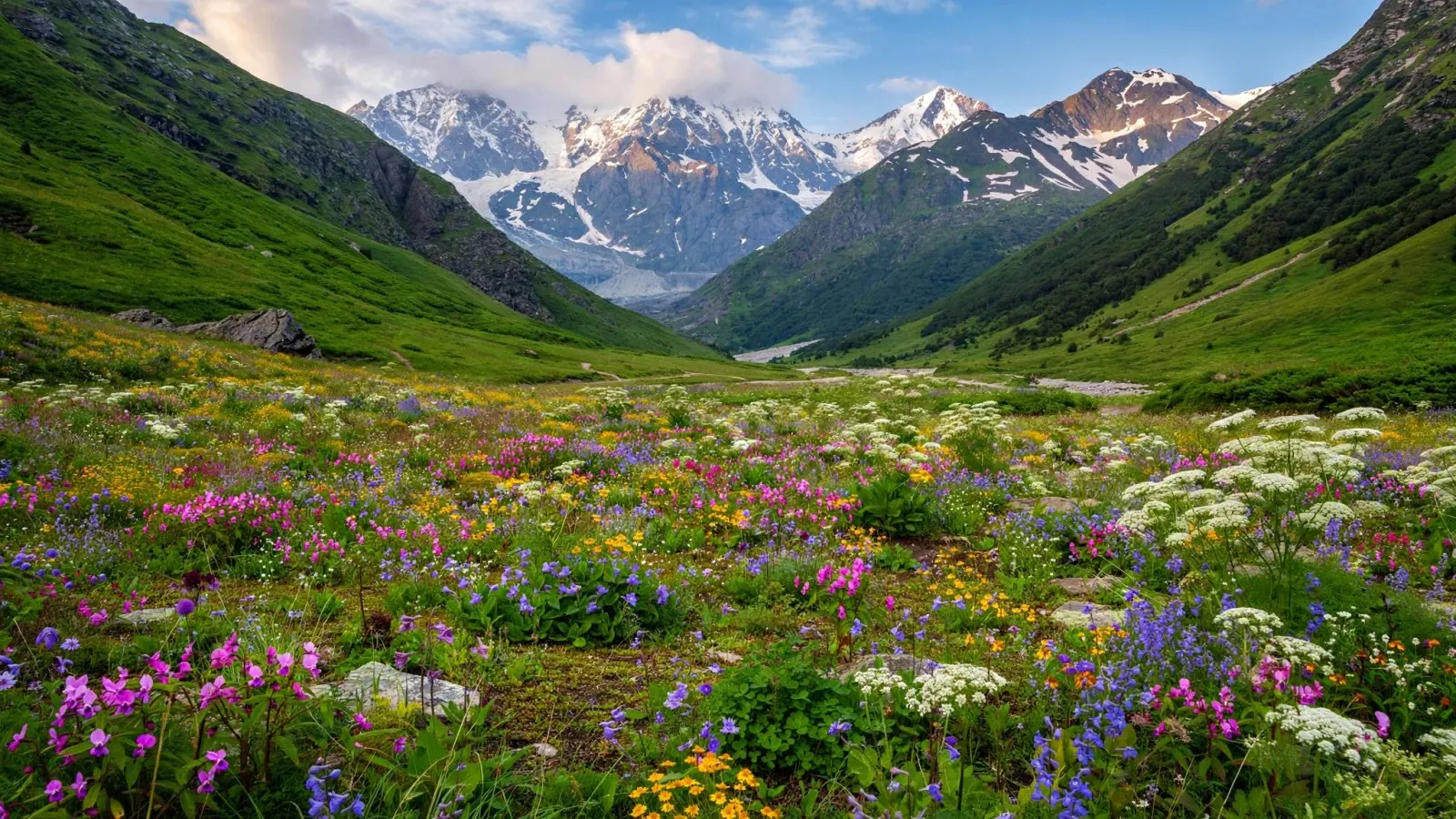
Most visitors pair Hemkund with the Valley of Flowers, which branches off from Ghangaria in the opposite direction and is a gentler day trek through alpine meadows that are at their best roughly from July to September. Doing both properly needs three nights at Ghangaria rather than one: one day for Hemkund, one for the valley, and a buffer for weather. The valley requires its own entry fee and has its own rules, including no overnight stays inside the park, so read the Valley of Flowers trek guide before combining the two. Registration requirements for the Hemkund yatra itself have varied by year, sometimes handled through the state yatra registration system and sometimes through local arrangements, so check the current official position for 2027 close to your travel date rather than relying on a previous year's process, and carry photo identification regardless.
Accommodation is simple and seasonal. Ghangaria has gurdwara accommodation, private guesthouses and lodges, and the gurdwara langar serves meals, but capacity is limited and peak weekends fill early, so book ahead where booking is possible and carry a fallback plan. Govindghat has more options, and many pilgrims prefer to base there and trek up in stages. Costs are best planned as ranges: rooms at Ghangaria are typically modestly priced compared with hill-station hotels, pony and porter charges are set locally and vary by season, and food is simple and filling rather than varied. Budget generously for the road journey itself, since mountain taxi and bus fares add up, and keep cash in hand because card and network connectivity cannot be relied on in the upper valley. For senior pilgrims and families, the senior citizens tips guide covers altitude, pacing and support options that apply equally here.
What to pack, fitness preparation, and mistakes to avoid
Pack for cold, rain and sun in the same day: a waterproof jacket, a warm layer, a cap, gloves, sunscreen, and sturdy trekking shoes with ankle support that you have already broken in. A walking stick helps enormously on the steep stone steps, both up and down, and a small daypack with water, snacks, basic medicines and a rain cover is all you need for the lake day; leave the main luggage at Ghangaria. Fitness preparation should start weeks ahead: regular brisk walking, stair climbing, and at least a couple of long walks with a loaded daypack, since the climb is a sustained steep effort at altitude, not a casual stroll. If you have a heart condition, asthma or any condition affected by altitude, speak to a doctor before committing, and build an acclimatisation day into the plan rather than rushing from the plains to the lake in 48 hours.
The mistakes are predictable and therefore avoidable. Starting the Govindghat to Ghangaria trek late in the day and arriving exhausted after dark. Attempting Hemkund the morning after arriving at Ghangaria without a proper night's rest. Ignoring early altitude symptoms. Carrying too much on the lake day. And treating the road journey as a formality: landslides and road work can add hours in the monsoon and post-monsoon months, so keep a buffer day at the end of the trip. Pilgrims extending the journey to Badrinath, which is geographically close to the Hemkund region, should read the Badrinath Dham 2027 guide and the Kedarnath 2027 guide for the wider Garhwal circuit, and anyone considering helicopter options for the broader region should check how they work in the Uttarakhand helicopter guide before assuming availability.
The road journey to Govindghat deserves planning in its own right, because it is long, mountainous and unforgiving of tight schedules. Most pilgrims travel from Haridwar or Rishikesh to Joshimath on the first day, a drive of roughly ten hours in good conditions, and then continue to Govindghat the next morning, though some break the journey at Srinagar or Rudraprayag. Joshimath itself is worth an unhurried evening: it is an old town with temples and a ropeway, and it is the natural acclimatisation stop before the higher valley. Shared jeeps and buses run the route, but private taxis offer the flexibility to stop for food, photographs and rest, and in the monsoon months the road can be interrupted by landslides, so the buffer day at the end of the trip is not optional decoration but the difference between a delayed return and a missed flight. Carry snacks, water and warm layers for the drive itself, since mountain weather changes with altitude and the higher stretches can be cold even in summer.
- Season typically June to October: confirm the official 2027 opening and closing dates before booking anything.
- Spend a night at Ghangaria before the lake climb, and descend promptly if altitude symptoms worsen.
- Allow three nights at Ghangaria if combining Hemkund with the Valley of Flowers.
- Train for a steep sustained climb: stairs, long walks and a loaded daypack, starting weeks ahead.
- Keep a buffer day for mountain road delays and carry cash for the upper valley.
Hemkund rewards the pilgrim who arrives rested, walks slowly and respects the altitude — and punishes the one who treats a 4,600-metre lake like a day trip.
- Hemkund Sahib Management Trust and Uttarakhand Tourism — official season dates and yatra information for 2027 (to be confirmed when published).
- Valley of Flowers National Park — entry rules and seasonal guidance.
Share this article