Bandhavgarh Safari Booking Guide: Tala, Magadhi, Khitauli and the Buffer Zones
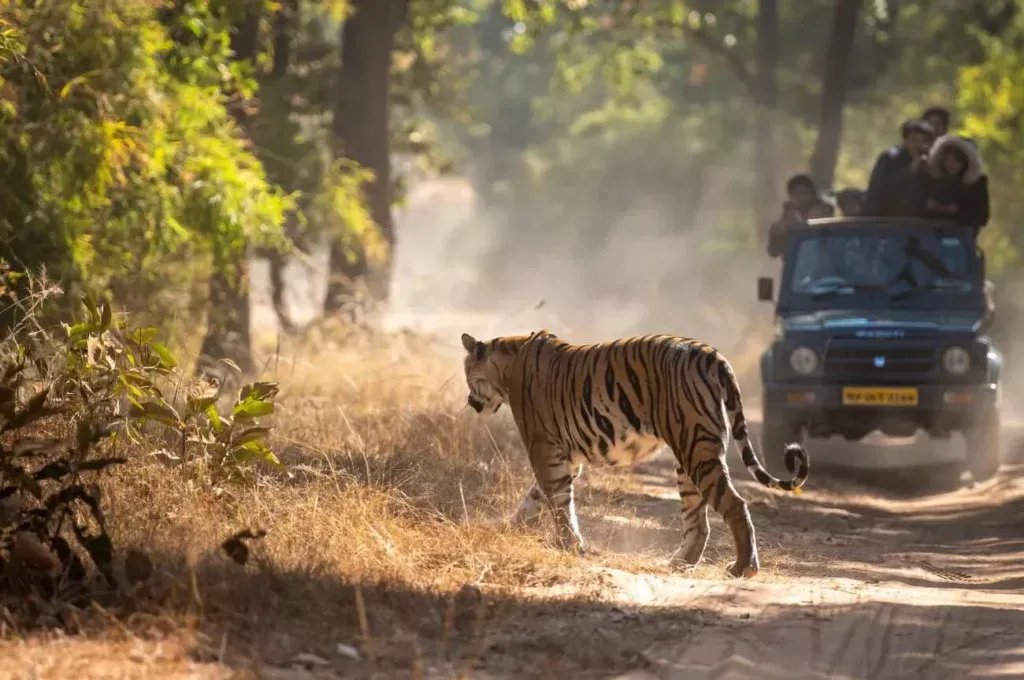
Bandhavgarh is where India's tiger maths works hardest in the visitor's favour: a compact reserve in Madhya Pradesh with one of the country's highest tiger densities, wrapped around a fort-topped hill that has watched over these forests for two thousand years. But Bandhavgarh rewards planning more than luck. Its safaris are split across three core zones and three buffer zones, permits are rationed and date-specific, and the difference between a good trip and a great one is mostly decided at the booking screen. This guide explains the zones, the permit system and the season, so the screen is where your trip is won.
The three core zones, honestly compared
Tala is the zone of the postcards: the meadows of Chakradhara and Rajbehra below the fort hill, the oldest tourism zone in the park, and the one first-timers ask for by name. Its popularity is its only flaw — permits are the hardest to get on busy dates. Magadhi, entered from its own gate, mixes open grassland with dense sal forest and waterholes that hold animals through the dry months; regulars rate it level with Tala across a season, and a trip built only on Tala misses half the reserve's character. Khitauli, the western core zone, is the quiet achiever — good forest, a riverine stretch, and a sighting record that has improved year on year as territories have filled. The honest summary is the one the forest itself gives: tiger movement does not respect reputations, and four drives spread across two or three core zones will out-perform four drives chasing one famous name.
The buffer zones: not a consolation prize
Bandhavgarh's buffer zones — Dhamokhar, Johila and Panpatha — run safaris in the reserve's outer forests, and they deserve better than their reputation as leftovers. Buffer forests hold real wildlife: leopards, sloth bears, deer herds, rich birdlife, and tigers moving between territories use them constantly. What the buffer genuinely offers is availability — when core permits for your dates are gone, a buffer drive keeps the trip a safari trip instead of a hotel stay — and a different texture: village-edge forest, fewer vehicles, and naturalists who work harder for every sighting. Mix one buffer drive into a longer trip by choice; take it without disappointment when the core is full.
“In Bandhavgarh the permit is the plan. Everything else — the fort, the meadows, the tiger on the road — is what the permit makes possible.”
How booking actually works
- Permits are booked online through the Madhya Pradesh forest authorities' safari system, per vehicle, per drive, against named visitors — carry the same photo ID used at booking; it is checked at the gate.
- Jeeps and guides are assigned through the park system rather than privately hired inside the reserve; your hotel or operator can assemble the booking, but the permit itself is the official product — anyone selling certainty about sightings is selling fiction.
- Build the Wednesday rule in: core zones close on Wednesday afternoons, so a Wednesday in the middle of a trip is a buffer-drive, fort-view or rest day, not a lost one.
- Season timing: October to February is cool, green and beautiful, with sightings earned through thicker cover; March to June is hot — by May, severely so — but the dry forest concentrates animals at water and produces the year's most reliable tiger viewing. Choose your trade-off honestly.
Around the safaris, and getting there
Leave space between drives for the Bandhavgarh that is not a safari: the ancient fort on its cliff (visited under park arrangements), the Shesh Shaiya — the great reclining Vishnu carved in the forest — and the Baghel Museum at Tala village, whose exhibits include the story of the first white tiger found in these forests. Access runs through Madhya Pradesh's rail and air heads: Umaria is the closest railhead at roughly 37 km, Katni is about 100 km, and Jabalpur's airport is around 200 km — close enough that a Bandhavgarh trip pairs naturally with Khajuraho or with the other MP parks. Compare the booking systems across parks with our Ranthambore safari guide and Kaziranga safari guide, plan the state through Madhya Pradesh destinations, and book four drives minimum: in tiger country, the fourth drive is the one the forest usually saves its gift for.
How many drives, and how to split them
- The working pattern: three nights and four drives is the trip's sweet spot — two mornings and two afternoons give the forest four separate chances, in different light and different animal behaviour.
- Split zones, do not stack them: two drives in one core zone and two in another beats four in the famous one, because you are sampling two forests, two prey bases and two sets of alarm calls.
- Protect one morning above all: dawn drives in the cool months, when mist sits on the meadows and the night hunters are still moving, are statistically and atmospherically the strongest safaris of the day.
- Keep the last afternoon unbooked if the trip allows: if the first drives deliver, it becomes a rest; if they do not, buffer-zone and last-minute options sometimes open — and a flexible final slot has saved many trips.
Beyond the tiger, calibrate your eyes for the reserve's supporting cast, which is a cast worth travelling for on its own: leopards in the rocky country, sloth bears working the termite mounds at dusk, gaur — the great Indian bison — in the meadows, sambar and chital herds as the forest's alarm system, dhole packs in the open country, and a bird list that runs past 250 species, from crested serpent eagles over the fort hill to paradise flycatchers in the shaded nullahs. Visitors who watch the whole forest rarely leave Bandhavgarh disappointed; visitors who watch only for stripes sometimes do.
- Outlook Traveller — Bandhavgarh National Park Safari Guide: Best Time, Zones, Sightings and Stay
- Castaway Chris — Planning a Tiger Safari in Bandhavgarh National Park
- Jeep Safari Bandhavgarh — Safari Timings, Zone Vehicle Limits and Entry Rules
Share this article