Winter Char Dham Guide: Where Kedarnath, Badrinath, Gangotri and Yamunotri Are Worshipped in Winter
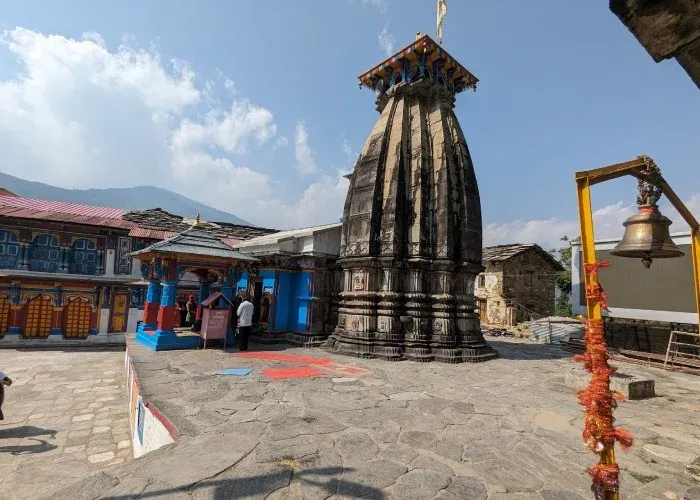
Every autumn, as snow closes over the high Himalayan shrines, the Char Dham does something beautiful: it comes down the mountain. The temples of Kedarnath, Badrinath, Gangotri and Yamunotri close for winter — Kedarnath traditionally around Bhai Dooj in late October or early November — but worship does not stop. In ceremonial processions, the deities are carried to winter seats at lower, accessible altitudes, where daily puja continues until the shrines reopen in spring. That winter circuit has a name of its own now: the Winter Char Dham Yatra.
For devotees, this matters practically as much as spiritually. Winter darshan in Ukhimath or Joshimath is calmer, closer and entirely feasible in the cold months, on roads that stay open when the high routes are buried. This guide explains where each deity winters, what the journey looks like, and how to plan it respectfully.
Kedarnath in winter: Omkareshwar Temple, Ukhimath
When Kedarnath's portals close, the deity's ceremonial seat — carried in a doli procession with priests and devotees — descends to the Omkareshwar Temple in Ukhimath, a village near Guptkashi in Rudraprayag district. For roughly six months Ukhimath becomes Kedarnath: the daily aartis and offerings continue here, and tradition holds winter darshan at Ukhimath to carry the same blessing as the high shrine. The Omkareshwar temple also hosts the winter seat of Madhyamaheshwar, one of the Panch Kedar, so a single morning covers remarkable ground. It is at Ukhimath, on Mahashivratri, that the coming season's Kedarnath opening date is traditionally announced — if you are planning a summer yatra, that announcement is your starting gun.
Badrinath, Gangotri and Yamunotri: Joshimath, Mukhba and Kharsali
Badrinath's winter worship centres on Joshimath, the ancient town founded in the tradition of Adi Shankaracharya, where the deity is honoured at the Narsingh temple through the closed season — Joshimath is also the practical winter base for the Auli slopes, so pilgrims and skiers share the town happily. Gangotri's goddess descends to Mukhba village near Harsil, a beautiful, quiet settlement in the Bhagirathi valley where the winter aarti is an intimate village affair. Yamunotri's seat is Kharsali, close to the summer shrine but low enough to stay accessible, where the temple of the goddess anchors a traditional Garhwali village.
“The Char Dham does not close in winter. It comes down the mountain to meet you.”
Planning a winter Char Dham trip
- Sequence it like the summer yatra — Yamunotri (Kharsali), Gangotri (Mukhba), Kedarnath (Ukhimath), Badrinath (Joshimath) — or take a single seat as a focused weekend from Rishikesh or Dehradun.
- Roads to the winter seats are far lower and generally kept open, but winter weather still rules: keep buffer days, start drives early, and check conditions locally before the Mukhba and Kharsali legs.
- Dress for genuine Himalayan winter — layered woollens, a windproof shell, and proper shoes — even though you are not climbing to 3,500 metres.
- Stays are simpler than in the summer season and the famous crowds are absent; that quiet is the point, so keep days unhurried.
Use the winter trip to scout the summer one: our Char Dham Yatra 2027 route and registration guide lays out the full circuit, the Kedarnath Yatra 2027 guide covers the high shrine itself, and the Panch Kedar guide explains Madhyamaheshwar's place in the story. The Kedarnath destination page is the place to start an enquiry when you are ready to fix dates.
What a winter seat actually feels like
First-time visitors sometimes imagine a closed temple with a small shrine beside it. The reality is warmer and more complete. In Ukhimath, Joshimath, Mukhba and Kharsali, the winter seat is the religious centre of the town for half the year: the deity's palanquin is received with processions and music, the daily aartis run on the full temple schedule, and the priests who serve the high shrine serve here too. Darshan queues are measured in minutes rather than hours. You will likely be offered the aarti flame by a priest who has time to talk, in a courtyard where the loudest sound is the wind in the deodars. For elderly pilgrims and families who find the summer yatra's altitude and crowds difficult, winter darshan is not a substitute — it is often the better pilgrimage.
Building the winter itinerary
The four seats do not sit on one simple road, so plan in two halves. Ukhimath and Joshimath pair naturally on a Garhwal circuit out of Rishikesh or Dehradun — Ukhimath via Guptkashi, then Joshimath up the Alaknanda valley, with an optional day on Auli's slopes above Joshimath if snow and skiing appeal. Mukhba and Kharsali form the second half, reached through Uttarkashi: Mukhba lies up the Harsil valley, one of the prettiest winter drives in Uttarakhand, all apple orchards and Bhagirathi bends, while Kharsali is the trailhead village of the Yamunotri route. Four to six unhurried days cover all four seats comfortably; two days cover Ukhimath and Joshimath alone. Hire experienced hill drivers, keep one buffer day against weather, and remember that daylight is short — the aarti, not the road, should own your evenings.
Who should choose the winter yatra? Devotees who cannot manage the summer trek to Kedarnath's altitude; families travelling with elders, for whom short walks from road-head towns replace long climbs; photographers and slow travellers who want Garhwal's villages rather than its queues; and anyone whose leave falls between November and April and who assumed the Char Dham was simply closed to them. It is not closed — it has moved, deliberately and beautifully, to where people can reach it. Check the season's announced dates and any registration requirements before you travel, keep the plan loose enough for mountain weather, and go: the winter Char Dham is one of Indian pilgrimage's best-kept open secrets.
Above all, slow down: the winter seats reward the pilgrim who stays for the full aarti, talks to the temple town, and lets the mountains set the timetable instead of fighting it.
Keep this page bookmarked alongside the summer guides: between the winter seats now and the high shrines in season, the Char Dham can hold a pilgrim's devotion, and a traveller's calendar, in every single month of the year.
- Times of India — Winter Char Dham Yatra: Where Do the Deities Go When the Char Dham Is Closed?
- Economic Times — Winter Char Dham Yatra 2025: The Winter Abodes Explained
Share this article