Tungnath Trek Guide: Route, Difficulty, Best Months & Chandrashila Summit
By My Quick Trippers · 17 Oct 2026
7 min read · Mountains & Adventure
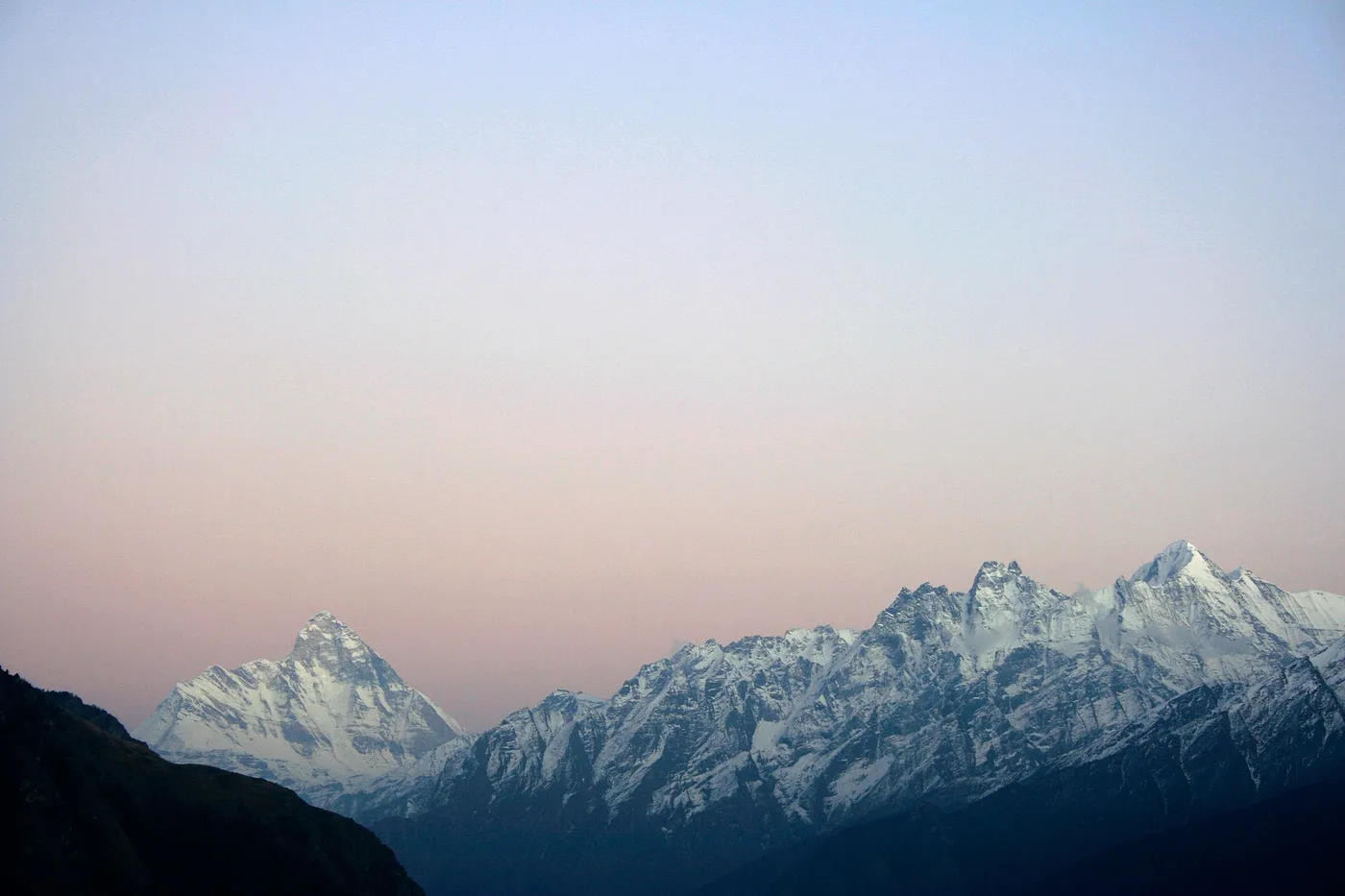
At 3,680 metres, Tungnath is the highest Shiva temple in the world — the highest of the five Panch Kedar temples, reached by a 3.5 km trek from the meadows of Chopta that even beginners can complete in a day. Add the 1.5 km extension to the Chandrashila summit, and the same day delivers one of the great Himalayan panoramas: Chaukhamba, Nanda Devi, Trishul and the Kedarnath range in a single 360-degree sweep. This Tungnath trek guide covers the route in detail, honest difficulty assessment, the best months, the winter closure you must plan around, where to stay in Chopta, and what to carry. For the temple's legends and religious significance, see our Tungnath temple guide — this post is the trekker's manual.
The Route: Chopta to Tungnath to Chandrashila
Chopta (2,680 m), a hamlet of meadows and oak forest on the Ukhimath–Gopeshwar road, is the trailhead. The 3.5 km path to Tungnath is paved with stone for most of its length, climbing steadily through rhododendron forest that bursts into red bloom in April–May. There are tea stalls and rest points at intervals — this is a pilgrim trail as much as a trek, and the infrastructure shows it. Most walkers reach the temple in two to three hours at a comfortable pace. From the temple, the Chandrashila trail continues 1.5 km up a steeper, rockier path to the summit at about 4,130 metres — another 45 minutes to an hour. The summit holds a small temple and, on clear days, the panorama that makes the extra climb non-negotiable: the full sweep from Chaukhamba to Nanda Devi. Descend the same way; the round trip from Chopta is comfortably done between 7 AM and 3 PM.
How Difficult Is the Tungnath Trek, Honestly?
Easy-moderate, and the 'moderate' is almost entirely the altitude. There are no technical sections, no exposed drops, no scrambling — a fit twelve-year-old and a reasonably active sixty-year-old both complete it regularly. What catches people out is pace: at 3,680 metres the air is thin enough that rushing the first kilometre produces a pounding headache for the rest of the climb. Walk slowly, drink water at every rest point, and take the altitude seriously even though the distance sounds trivial. If you have trekked Kedarnath's 16 km, Tungnath will feel like a morning walk; if this is your first Himalayan trek, it is the ideal first one — short, safe, spectacular, and with tea stalls. For comparison with a more demanding Himalayan trail, our Sandakphu-Phalut trek guide shows what the next level looks like.
Best Months — and the Winter Closure
April–June: rhododendrons and clear views
The classic season. Rhododendrons bloom through April and May, the meadows are green, and the temple — which opens around late April/May — is active with pilgrims. Mornings offer the clearest summit views; afternoons can cloud over. This is also the busiest period, so Chopta stays fill on weekends.
September–November: the photographer's season
Post-monsoon clarity gives the sharpest Himalayan views of the year, the crowds thin dramatically, and the light is superb. It is colder — carry full winter layering, especially for a Chandrashila sunrise — but for many trekkers this is the finest window. Our October–November packing guide covers the clothing system.
November–April: temple closed, trek transformed
The Tungnath temple closes for winter (the deity is moved to Makkumath near Ukhimath, where winter worship continues), and snow covers the trail — the trek becomes a snow trek requiring proper winter gear and, in deep snow, a guide. Beautiful, but a different expedition from the summer pilgrim trail. Do not plan a temple darshan in these months.
The 'moderate' in Tungnath's easy-moderate rating is almost entirely the altitude. Walk slowly, drink water at every rest point, and the 3.5 km feels like a morning walk.
Where to Stay: Chopta Is the Base
Stay in Chopta, not on the trail — there is essentially no accommodation at Tungnath itself beyond a couple of basic dharamshala-type options in season. Chopta offers camps, cottages, guesthouses and GMVN accommodation across budgets; book ahead for April–June weekends. Ukhimath (30 km away) is the fallback with more options, including the winter seat of the Tungnath deity at Makkumath nearby. Start the trek by 7 AM: this gets you to the temple before the day-trippers, the summit before afternoon cloud, and back to Chopta for a late lunch. For more offbeat Uttarakhand beyond the famous trails, our hidden gems of Uttarakhand is worth a browse.
What to Carry for the Day Trek
- Trekking or sports shoes with good grip — the paved trail is slippery when wet, and the Chandrashila section is rocky.
- Layered clothing: thermal or warm base, fleece, and a windproof jacket. The summit is significantly colder and windier than Chopta.
- 2 litres of water, energy bars and dry fruits — the trailside stalls are welcome but not a meal plan.
- Sunglasses, sunscreen and a cap — the high meadows offer zero shade.
- Rain layer in monsoon-adjacent months; headlamp if you are attempting a sunrise summit (start 4 AM from Chopta).
- Photo ID — the region has occasional checkposts, and it is good practice on all Uttarakhand trails.
Combining Tungnath With a Larger Trip
Tungnath slots beautifully into wider Garhwal itineraries. The classic combination is the Panch Kedar circuit for the devout; for everyone else, pair it with Chopta's meadows, a day at Ukhimath, and the drive to Gopeshwar — or attach it to a Kedarnath yatra, since the trailhead region overlaps. Our Kedarnath trek preparation guide covers the bigger neighbour, and the Badrinath how-to-reach guide helps if you are extending east. Two days — one for the trek, one buffer for weather — is the right allocation; the trek itself needs only one morning, but mountain weather deserves respect.
Frequently Asked Questions
Can beginners do the Tungnath trek?
Yes — it is one of the best beginner Himalayan treks. The 3.5 km paved trail has no technical sections, there are rest points and tea stalls, and the whole thing is done in half a day. The only caution is altitude: walk slowly and hydrate.
Is Chandrashila worth the extra 1.5 km?
Completely. The summit panorama — Chaukhamba, Nanda Devi, Trishul, the Kedarnath range in one sweep — is among the finest easily-accessible Himalayan viewpoints in India. Skipping it after reaching Tungnath is the trek's great regret.
When does the Tungnath temple open and close?
The temple typically opens in late April/May and closes around November (dates announced each season). In winter the deity is worshipped at Makkumath near Ukhimath. The trek trail itself is accessible year-round but becomes a snow trek in winter.
Are guides required for the Tungnath trek?
No — the trail is obvious, paved, and busy in season. In winter snow conditions or for a pre-dawn Chandrashila summit, a local guide from Chopta is sensible and inexpensive.
Share this article